
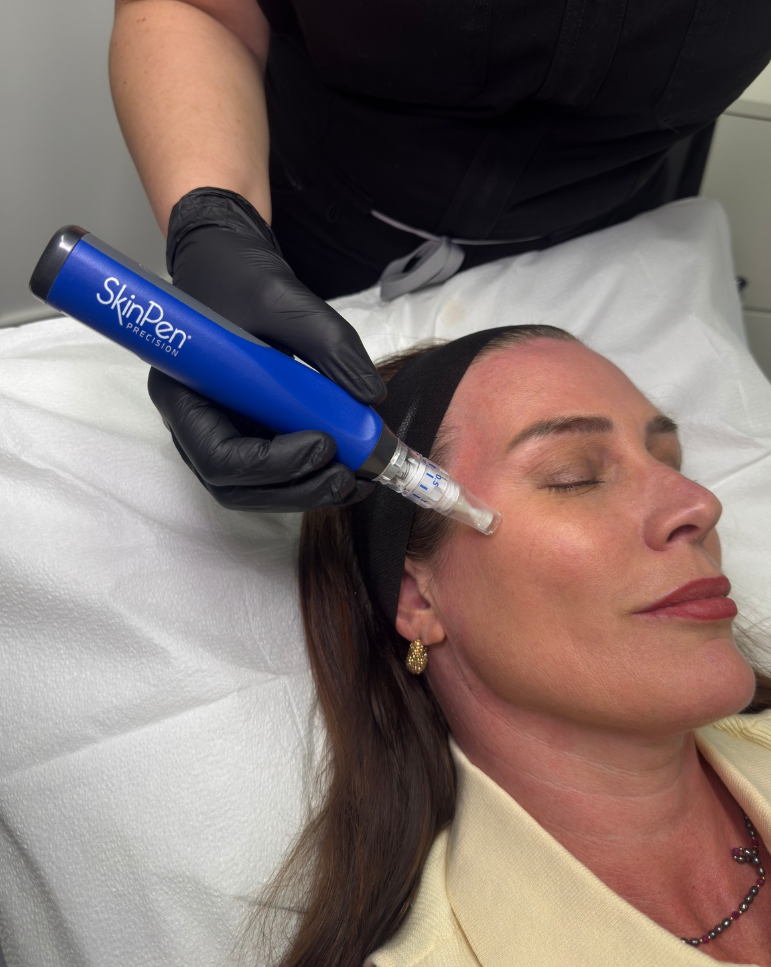
Microneedling is a minimally invasive facial treatment that uses fine, sterile needles to create controlled micro-injuries in the skin. This triggers your body's natural healing response, boosting collagen and elastin to visibly smooth texture, soften fine lines, and reduce acne scars over time. It's ideal for patients seeking natural-looking rejuvenation with minimal downtime.
Microneedling facial is safe for most skin types when performed by a trained professional.
We start by assessing your skin, listening to your goals, and creating a personalized plan. This conversation determines whether microneedling is right for you and how many sessions you'll likely need.
A topical anesthetic is applied for 15-20 minutes so you're comfortable during treatment. While it works, we cleanse and prep your skin thoroughly.
Using the SkinPen device, we carefully create micro-channels across the treatment area. Most clients feel warmth and mild pressure, nothing sharp. The entire process takes 30-60 minutes depending on what we're treating.
We apply a soothing serum and medical-grade SPF immediately after. You'll receive detailed home-care instructions covering the next few weeks, what to expect, what to avoid, and when your skin will be ready for normal activities. Most clients return to work the next day with minimal redness.
Treatments performed using SkinPen, an FDA-cleared microneedling system
Personalized treatment plans adjusted session-to-session based on how skin responds
Boutique, appointment-only setting in Old Town Pasadena
Option to combine with PRP (from your own blood) for enhanced healing and results
Redness, warmth, tightness
Pinkness, sensitivity, possible dryness
Skin may feel drier or lightly flaky
Gradual improvement in texture and radiance
2 Weeks Before:
3 Days Before:
Day Of:
Aftercare Essentials
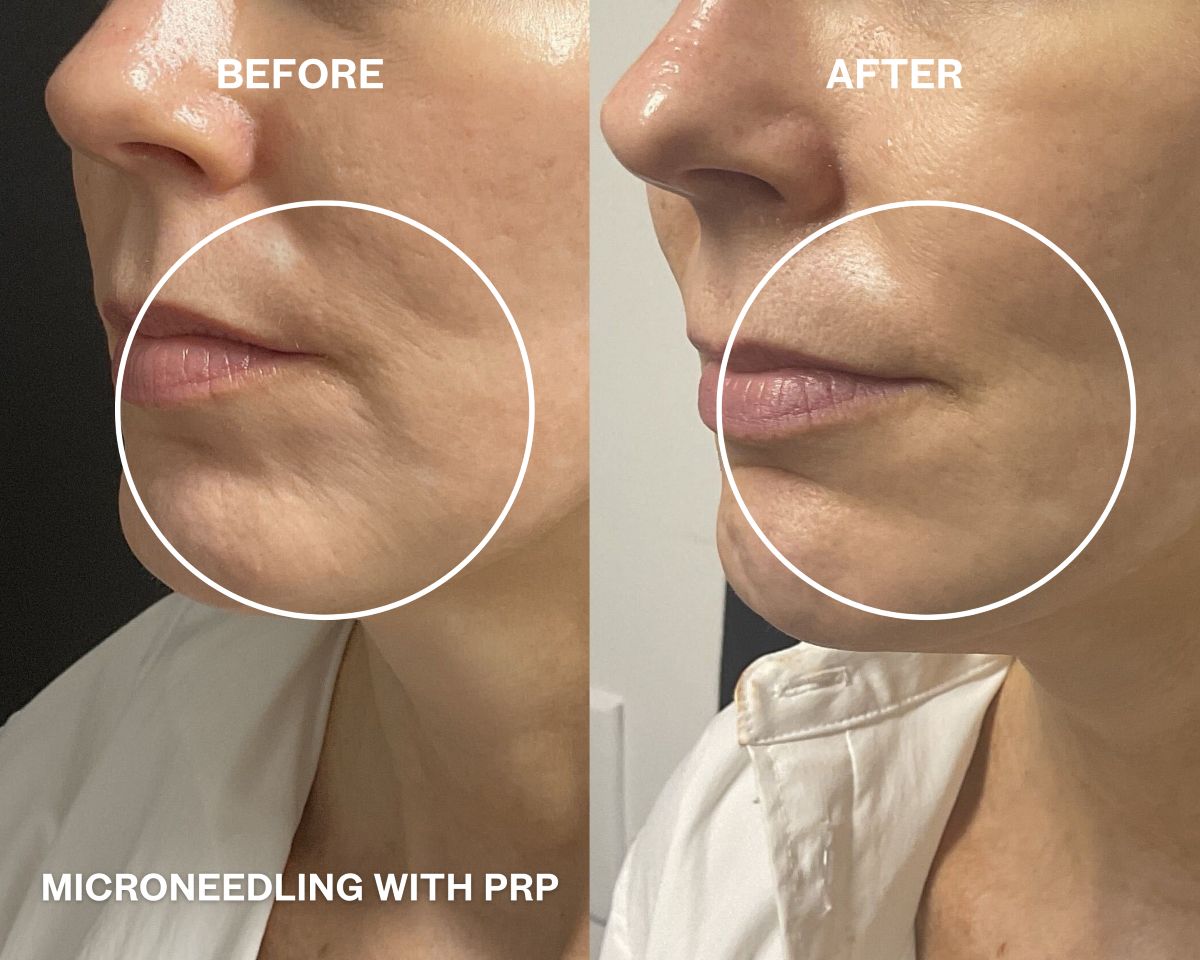
If you're looking to improve acne scars, fine lines, enlarged pores, or uneven texture without a lengthy recovery period, microneedling may be a good fit. During your consultation, your provider will evaluate your skin and recommend the appropriate treatment approach.
Most clients benefit from a series rather than one treatment. For general concerns such as dullness, texture, visible pores, and early fine lines, a plan of 3-4 sessions is common. More pronounced acne scarring may require 4-6 or more treatments. Your Eyre provider will recommend a plan based on your skin, goals, and response to treatment.
Some clients notice a fresher, smoother-looking complexion within the first week. More meaningful changes develop gradually as the skin produces and remodels collagen, often becoming clearer around 4–6 weeks after treatment. Because results build over a series, the best outcome is usually seen after completing your personalized plan.
Expect temporary redness, warmth, and sensitivity similar to a mild sunburn. These effects commonly improve within 24-72 hours, though mild dryness or flaking can occur as the skin heals. Your provider will give you treatment-specific instructions, including when to return to makeup, exercise, active skincare, and sun exposure.
Eyre applies a topical numbing cream before treatment to help maximize comfort. Most clients describe the sensation as light pressure, vibration, or prickling rather than significant pain. Sensitivity can vary by treatment depth and area, with bony areas such as the forehead often feeling more sensitive.
Microneedling can help improve the appearance of certain acne scars by supporting collagen remodeling and smoothing uneven texture over time. Treatment plans depend on scar type, depth, skin tone, and whether acne is currently active. For deeper or more complex scarring, Eyre may recommend a series or a combination approach.
Microneedling can be an appropriate option for a wide range of skin tones because it does not rely on light- or laser-based energy. However, every treatment should begin with an individual assessment of pigmentation history, current skin health, acne activity, and sensitivity. Your provider can tailor depth, technique, and aftercare to your skin.
Microneedling may need to be delayed if you have active acne, an open wound, an active cold sore or skin infection, or an inflammatory skin flare in the treatment area. Be sure to tell your provider about recent isotretinoin use, keloid scarring, blood-thinning medication, pregnancy/breastfeeding, immune conditions, and any history of poor healing so they can confirm whether treatment is appropriate.
For the first 24–48 hours, keep your routine simple and follow the aftercare plan provided by Eyre. In general, avoid makeup, direct sun, intense exercise, hot environments, swimming, and harsh or active skincare. Retinoids, exfoliating acids, and other potentially irritating products are typically paused for several days while the skin recovers.
Neither treatment is universally better, they address different concerns. Microneedling is often selected for collagen support, acne-scar texture, visible pores, and fine lines. Chemical peels are commonly used for surface exfoliation, uneven tone, dullness, and certain pigment concerns. Eyre can recommend the right option based on your skin goals and downtime preferences.
Traditional microneedling uses sterile needles to create controlled micro-channels that trigger a healing response. RF microneedling adds radiofrequency energy below the skin’s surface, which may be recommended for patients who also want to address firmness, deeper texture concerns, or more noticeable scars. The right option depends on your skin and treatment goals.
Fill the form below and we’ll get back to you as soon as possible!