

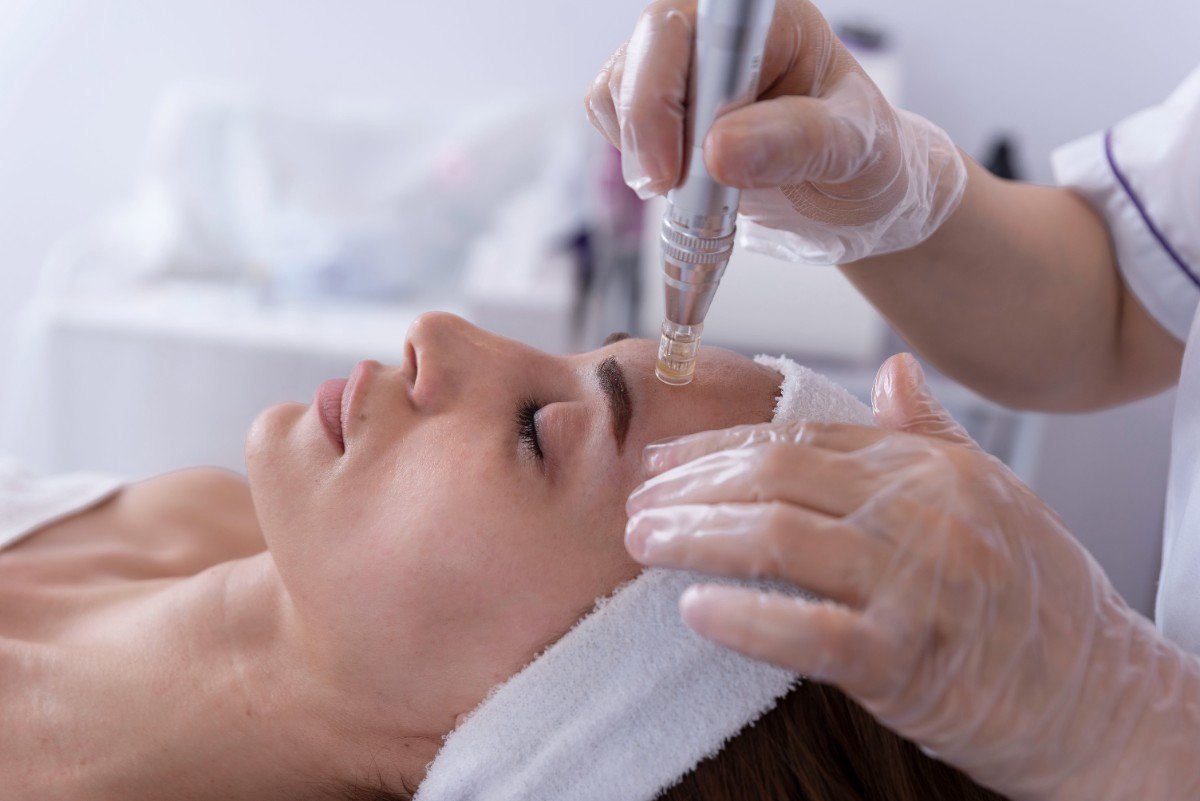
Summary: Microneedling works for acne scars, fine lines, enlarged pores, and uneven texture, but it’s gradual, not instant. Your body produces new collagen over weeks and months. One treatment shows subtle improvement, but most need a series for meaningful results. It’s safe when done professionally, but not a replacement for surgery. Best for people willing to wait for genuine skin improvement.
Microneedling can work for selected skin concerns, particularly acne scars, fine lines, enlarged pores, uneven texture, and early signs of sun-related skin change. It works by creating controlled microchannels in the skin that activate a natural repair response and may support new collagen and elastin production over time.
The best answer to “does microneedling work?” is that it can be effective when the treatment matches the concern, the skin is an appropriate candidate, and the procedure is performed with proper technique. It is not an instant fix, a universal replacement for every resurfacing treatment, or a guarantee of dramatic results after one session.
Microneedling may improve the appearance of acne scars, fine lines, wrinkles, enlarged pores, uneven texture, and selected scars by supporting collagen remodeling. It is most effective when used for concerns that respond to gradual improvement in skin structure rather than immediate lifting or volume replacement.
The treatment uses fine needles to create controlled micro-injuries in the skin. The body responds by beginning a repair process that may stimulate collagen and elastin production. Over time, this can make the skin look smoother, more even, and more refined.
Microneedling is best understood as a gradual skin-quality treatment. It does not add volume like dermal filler, relax expression lines like Botox, or produce the same lifting effect as surgery.
Microneedling can be effective for certain depressed acne scars, especially rolling and boxcar scars. The treatment may help remodel uneven scar tissue by encouraging collagen formation beneath the surface.
A clinical study of people with atrophic acne scars found that microneedling improved scar grades after a series of treatments, with mild short-term side effects such as burning sensation and redness resolving within one to two days.
Microneedling may be most useful for:
It may be less suitable as a standalone treatment for:
The most effective acne-scar plan may involve microneedling alone or a combination of treatments, depending on the scar type and severity.
Microneedling may soften the appearance of fine lines and early wrinkles by supporting collagen and elastin remodeling. It is often considered for concerns related to texture, early photoaging, and reduced skin resilience.
It may be used on areas such as:
Microneedling does not stop facial movement. Dynamic wrinkles, such as frown lines, forehead lines, or crow’s feet that appear when you make expressions may respond better to neuromodulator treatment.
For deeper wrinkles or significant skin laxity, microneedling may be one part of a broader treatment plan rather than the only solution.
Microneedling may help skin look firmer by encouraging collagen and elastin remodeling, but its tightening effect is usually subtle and gradual.
It can be a suitable option for people with mild early laxity, crepey texture, fine lines, enlarged pores, or skin that has begun to look less resilient. It does not create the same lifting effect as a surgical facelift.
Microneedling may be considered when mild laxity appears alongside:
If your main concern is moderate to significant sagging, RF microneedling, other energy-based skin-tightening treatments, injectables, or surgery may be more appropriate.
Microneedling may make enlarged pores look less visible by improving the texture and firmness of the surrounding skin. It does not permanently close pores.
Pore size is influenced by genetics, oil production, sun exposure, skin elasticity, and prior acne. As the skin’s collagen support and surface texture improve, pores may look more refined.
Results are usually gradual and may be more noticeable after a treatment series. Maintaining results may also require consistent sunscreen use, gentle skincare, and management of oiliness or acne.
Microneedling may improve uneven texture and contribute to a smoother, more even-looking complexion. It can be especially useful when roughness, acne scars, enlarged pores, and dullness occur together.
Some people may notice improved radiance or smoother-feeling skin within weeks. More meaningful changes to texture generally develop over several months as collagen remodeling continues.
Microneedling may also be considered for selected post-acne marks or uneven-looking tone. However, pigmentation is complex. It is not the ideal treatment for every dark spot, melasma concern, redness, or vascular issue.
People with a history of post-inflammatory hyperpigmentation should receive an individualized assessment and cautious treatment plan.
Microneedling may improve the appearance of selected stretch marks by supporting collagen remodeling within the affected skin.
Stretch marks are scar-like changes that form when the skin stretches faster than its collagen structure can adapt. They cannot always be removed completely, but they may look smoother or less visible after an appropriate treatment series.
Results depend on:
Microneedling results are gradual because collagen production and remodeling take time.
A series of treatments is often recommended. The American Society for Dermatologic Surgery notes that at least three monthly treatments are commonly used for optimal results, while some concerns may require more sessions.
For facial acne scars, a study of four automated microneedling treatments spaced four weeks apart found significant improvement in acne-scar appearance three months after the final treatment.
The number of sessions depends on the concern being treated, its severity, your skin’s response, and your desired outcome.
A provider may recommend a series for:
In general, concerns such as acne scars and stretch marks may require more sessions than mild texture or radiance concerns. Treatments are commonly spaced several weeks apart so the skin can recover and begin collagen remodeling.
More treatment is not always better. The plan should balance results, recovery, skin sensitivity, and your treatment goals.
Microneedling can be safe when performed by a trained medical professional using sterile equipment, appropriate settings, and individualized aftercare.
It is a medical treatment, not simply a cosmetic facial. The American Academy of Dermatology emphasizes that noticeable, long-lasting microneedling results require medical knowledge of the skin and proper treatment technique.
Common short-term effects include:
Less common risks may include:
The risk of complications increases when treatment is too aggressive, the device is not handled properly, the skin is treated while irritated or infected, or aftercare instructions are not followed.
Microneedling may need to be postponed or avoided if you have:
A consultation should include a review of your medical history, skincare routine, medications, allergies, previous procedures, and treatment goals.
Professional microneedling is not the same as using a home dermaroller.
At-home devices may lead to irritation, pigmentation changes, infection, or scarring if used incorrectly. Professional treatment is the safer option for concerns such as acne scars, significant texture changes, or pigmentation-prone skin.
Microneedling is not automatically better than other treatments. It may be the right choice when the main goal is gradual improvement in texture, acne scars, pores, and early fine lines with limited downtime.
If you are asking does microneedling work and considering microneedling for acne scars, fine lines, uneven texture, enlarged pores, or skin rejuvenation, Eyre Esthetics can help you determine whether it is suitable for your goals.
During a consultation, the team can assess your skin concern, treatment history, sensitivity, and desired results. They can explain what level of improvement may be realistic, how many sessions may be appropriate, and whether microneedling should be combined with another treatment.
Eyre Esthetics offers SkinPen microneedling in Pasadena for clients seeking smoother texture, refined pores, improved acne-scar appearance, and more radiant-looking skin.
Microneedling can work for selected concerns such as acne scars, fine lines, enlarged pores, uneven texture, and selected scars. Results are gradual and depend on the treatment plan, skin concern, technique, and individual healing response.
Microneedling can improve the appearance of certain depressed acne scars, especially rolling and boxcar scars. Several sessions are often needed, and deeper or tethered scars may require combination treatment.
Microneedling may soften the appearance of fine lines and early wrinkles by supporting collagen remodeling. It does not stop muscle movement or provide the same effect as Botox, filler, or surgery.
Microneedling may create subtle improvements in firmness for mild early laxity. It is not a replacement for surgery and may not be enough for moderate or significant skin sagging.
Microneedling can be safe when it is performed by a trained provider using sterile equipment, appropriate depth, and individualized aftercare. It carries risks such as infection, irritation, pigment changes, and scarring if performed incorrectly.
An early glow may appear within days, but more meaningful collagen-related improvements often develop over several weeks to months. Acne scars and stretch marks may require a longer treatment series.
Many people need a series of at least three treatments for more noticeable results. The exact number depends on the concern, severity, skin sensitivity, and treatment goals.
Microneedling can worsen irritation, acne, pigmentation, or scarring if it is performed too aggressively, on unsuitable skin, with poor hygiene, or without proper aftercare.
Microneedling may be worth considering if you want gradual improvement in texture, acne scars, pores, fine lines, or early loss of firmness and are willing to complete a recommended treatment plan. It may be less suitable if you need immediate volume restoration, significant lifting, or a one-session dramatic result.
Una has always had a passion for skincare and loves helping others maintain healthy glowing skin. She has a background in healthcare and has an extensive understanding of the lymphatic system from her previous training as a certified Physical Therapist. Una received her Masters in Physical Therapy from Northwestern University. She met her husband, Dr. Steven Battaglia, at Northwestern during his ENT residency. Upon completion of the Masters Program, Una worked as a Physical Therapist in Chicago.
Fill the form below and we’ll get back to you as soon as possible!