

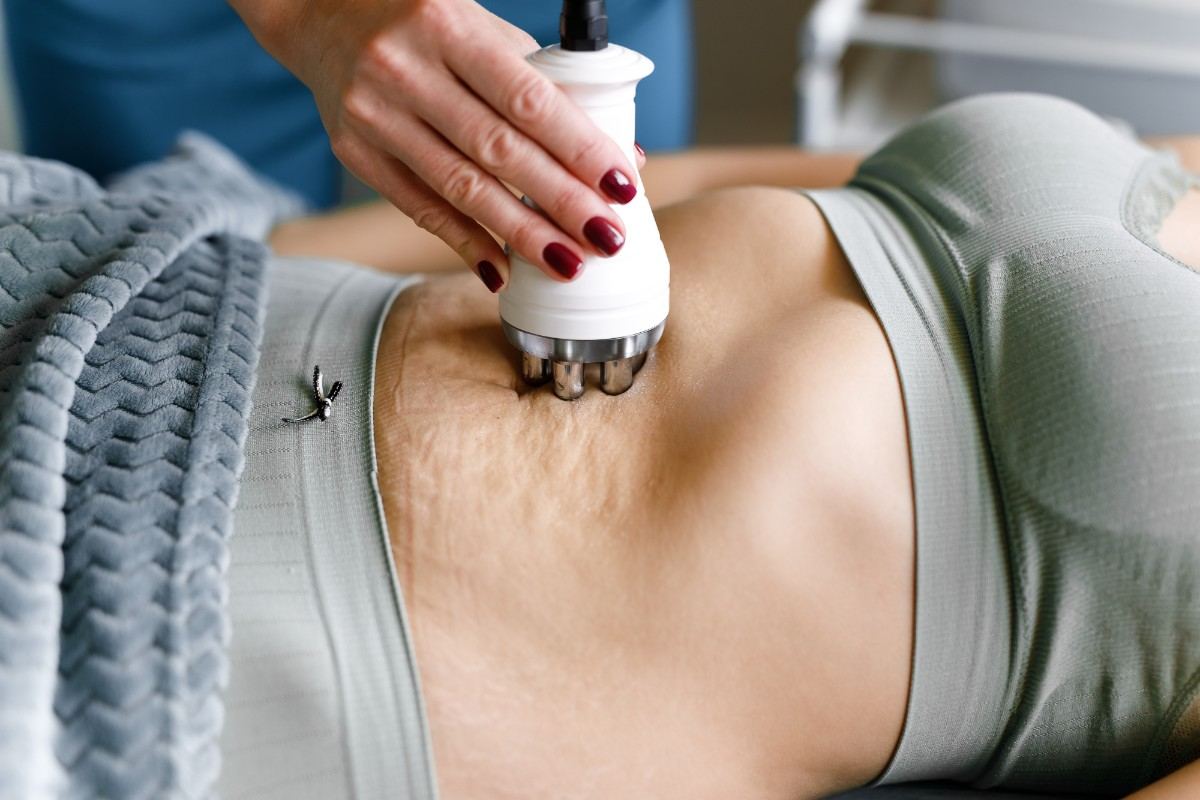
Summary: Microneedling may help stretch marks look smoother and less noticeable by triggering collagen remodeling. Newer red marks respond better than old white ones. Results take months, not weeks. You’ll probably need multiple treatments spaced several weeks apart. It won’t erase stretch marks completely; think of it as gradual improvement, not removal. Darker skin tones need careful treatment to avoid pigment changes.
Microneedling for stretch marks may improve the appearance of striae by creating controlled micro-injuries that encourage collagen remodeling. It cannot erase stretch marks completely, but research suggests it may make them look smoother, softer, and less noticeable over a series of treatments.
The results depend on whether the stretch marks are newer or more mature, their color and depth, the treatment area, skin type, and the number of sessions completed. A realistic goal is gradual improvement, not perfect removal.
Stretch marks, medically called striae distensae, are a type of dermal scar that develops when the skin stretches or changes faster than its collagen and elastin structure can adapt.
They may appear after:
Stretch marks commonly appear on the abdomen, hips, thighs, breasts, buttocks, upper arms, and lower back.
Newer stretch marks may appear red, pink, purple, or brown. These are often called striae rubrae.
Older stretch marks typically fade to white, silver, or lighter than the surrounding skin. These are often called striae albae.
Both types may respond to treatment, but newer stretch marks may show a stronger cosmetic response because they are still in an earlier stage of development. A recent study found greater improvement in red stretch marks than mature white stretch marks after treatment, although both groups improved over time.
Microneedling for stretch marks uses fine needles to create controlled microchannels in the affected skin. This stimulates a wound-healing response that may encourage collagen and elastin remodeling within the stretch mark.
The treatment may help:
Microneedling for stretch marks does not replace missing skin or completely restore the original appearance of the area. Stretch marks are a form of scarring, so improvement is usually gradual and incomplete.
Microneedling may help improve the appearance of both newer and mature stretch marks, but it does not remove them completely.
A 2024 systematic review of 11 studies found evidence that microneedling may improve stretch-mark appearance. The review also found that microneedling and laser treatments produced broadly comparable results in some comparisons, while microneedling had favorable patient-satisfaction and pigment-safety outcomes.
More recent research also found progressive improvement in both red and white stretch marks between three and six months after treatment. Newer red marks showed greater average improvement than mature white marks in that study.
The evidence is encouraging, but it has limitations:
The most accurate answer to “can microneedling help with stretch marks?” is yes; it may help reduce their appearance, but results vary, and complete removal should not be expected.
Microneedling stretch marks before and after photographs should be interpreted over an appropriate timeline. A photograph taken immediately after treatment may show redness, swelling, or temporary irritation rather than the final result.
A reliable comparison should include:
The treated area may appear red, warm, swollen, tight, or mildly irritated. Pinpoint bleeding can occur with deeper treatment.
Redness generally begins to settle. The area may feel dry, rough, or sensitive as the skin recovers.
The skin may begin to feel smoother, but collagen remodeling is still developing.
The stretch marks may look softer, less sharply defined, or more even in texture. Multiple treatments may be needed for a more noticeable change.
Do not compare a pre-treatment photograph with an image taken a few hours after treatment and call it a final outcome.
Microneedling for stretch marks may be considered for:
Newer marks may respond more visibly because they are biologically more active. Mature marks can still improve, but they may require more patience or additional treatment options.
The depth and width of the stretch marks also matter. Broad, deeply indented, or widespread marks may not respond as much as thinner, more superficial marks.
There is no universal number of microneedling for stretch marks treatments for stretch marks.
A provider may recommend a series based on:
Research protocols vary. Some studies use one to four treatments, while other treatment plans involve more sessions spaced several weeks apart.
Allowing adequate recovery time between appointments is important. Treating too aggressively or too frequently may increase irritation, pigment changes, or scarring without improving the final result.
Microneedling for stretch marks results develop gradually because collagen remodeling takes time.
A 2025 study found that stretch-mark appearance continued to improve between three and six months after treatment.
Your provider may recommend progress photographs at consistent intervals rather than relying on daily visual checks.
Microneedling for stretch marks can be appropriate for selected stretch marks when performed by a trained provider using sterile equipment and suitable treatment settings.
Temporary effects may include:
Potential complications include:
People with deeper skin tones or a history of post-inflammatory hyperpigmentation should discuss pigment risk and aftercare carefully before treatment.
Microneedling for stretch marks on the body may feel different from facial treatment. The sensation depends on the area, treatment depth, device, skin thickness, and individual sensitivity.
You may feel:
A topical numbing product may be used when appropriate. The provider should determine the correct product and application method based on the treatment area and your medical history.
More pain does not mean better results. Excessive discomfort may indicate that the treatment intensity or technique needs to be reassessed.
After treatment, the area may resemble a mild sunburn. Redness and warmth are often most noticeable during the first day or two.
General aftercare may include:
Contact your provider if redness, swelling, pain, or warmth becomes worse instead of gradually improving. Seek medical attention for pus, fever, severe pain, extensive blistering, or other concerning symptoms.
Microneedling for stretch marks may need to be postponed or avoided if you have:
Tell your provider about your medical history, medications, allergies, previous procedures, and history of pigment changes.
No treatment completely removes every stretch mark. The best option depends on the type, age, location, skin tone, treatment goals, and tolerance for downtime.
If you are considering microneedling for stretch marks, Eyre Esthetics can help you understand whether the treatment is appropriate for the area, age, texture, and appearance of your marks.
During a consultation, the team can assess your skin, discuss your goals, review your treatment history, and explain what type of improvement may be realistic. They can also discuss whether traditional microneedling, RF microneedling, or another approach may better suit your needs.
Schedule a consultation with Eyre Esthetics to explore a personalized treatment plan.
Microneedling may improve the appearance of red and white stretch marks by encouraging collagen remodeling. It cannot erase stretch marks completely, and several treatments may be needed.
It may help mature white stretch marks look smoother or less noticeable, although older marks may respond more slowly and less dramatically than newer red marks.
Newer red or pink stretch marks may show greater improvement because they are in an earlier stage. Mature white stretch marks can still respond, but outcomes vary.
The number varies by mark age, depth, size, skin type, and treatment plan. Research has used one to four treatments in some protocols, but a provider may recommend a different schedule.
Early texture changes may appear after several weeks, while more noticeable improvement can take three to six months as collagen remodeling continues.
No. Microneedling may reduce their appearance, but it cannot guarantee complete removal because stretch marks are a form of dermal scarring.
The treatment may feel like pressure, vibration, prickling, or brief pinching. Topical numbing may be used when appropriate, and discomfort varies by treatment area and depth.
Microneedling may be suitable for a wide range of skin tones, but pigment changes can occur. People prone to hyperpigmentation should discuss risk, treatment settings, and sun protection with a qualified provider.
At-home treatment can increase the risk of infection, uneven results, irritation, pigment changes, and scarring. Professional evaluation and sterile technique are safer, particularly for larger body areas.
Una has always had a passion for skincare and loves helping others maintain healthy glowing skin. She has a background in healthcare and has an extensive understanding of the lymphatic system from her previous training as a certified Physical Therapist. Una received her Masters in Physical Therapy from Northwestern University. She met her husband, Dr. Steven Battaglia, at Northwestern during his ENT residency. Upon completion of the Masters Program, Una worked as a Physical Therapist in Chicago.
Fill the form below and we’ll get back to you as soon as possible!