

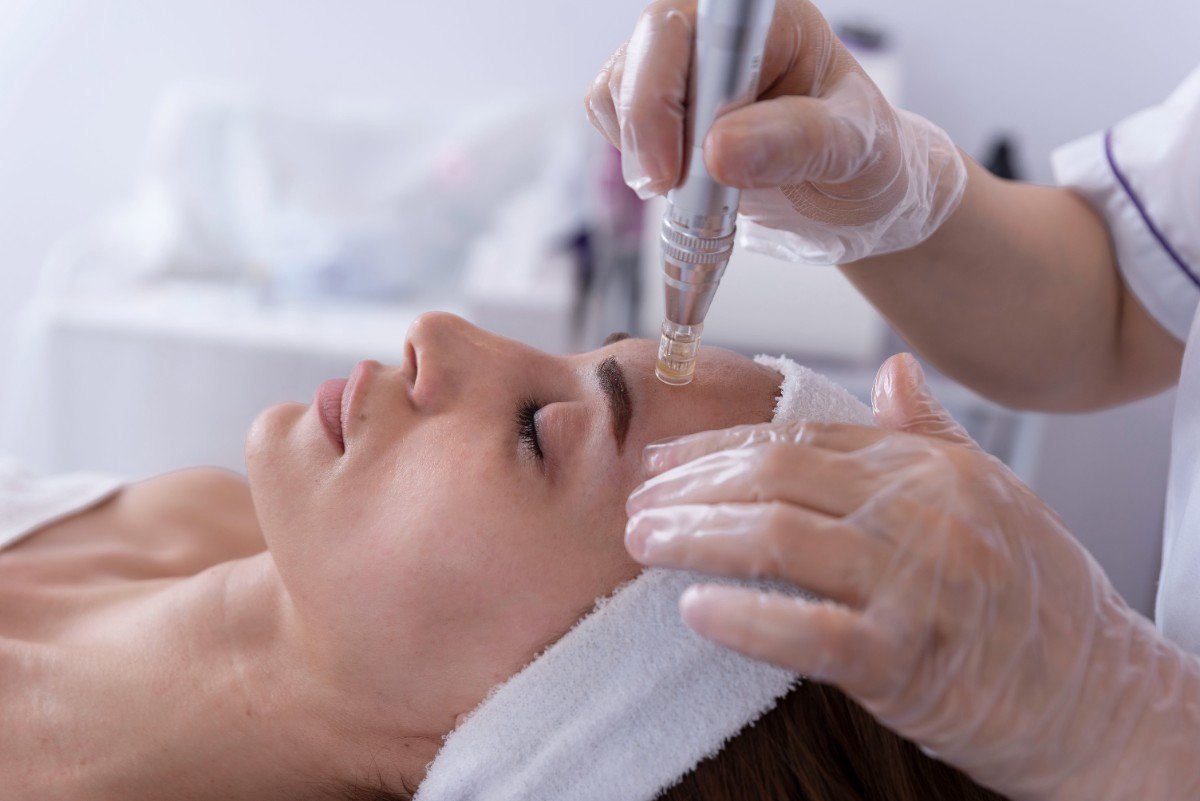
Summary: Microneedling recovery happens in stages. Day one looks worst: red, warm, tight. Days two through seven, redness fades, but skin stays dry and sensitive. The real work happens beneath the surface over weeks and months as collagen rebuilds. One treatment gives subtle improvement, but a series of treatments spaced weeks apart delivers meaningful change. Stick to your provider’s aftercare instructions; it actually matters.
Your skin doesn't look the same on day one after microneedling as it does on day seven. Understanding what happens during each microneedling healing stage helps you know whether your recovery is on track or whether something needs attention.
Everyone's skin heals differently. But most people experience similar progression: redness and warmth first, then dryness and sensitivity, then gradual improvement. This microneedling day by day guide breakdown explains what's happening beneath the surface during each microneedling healing stage and what you can do to support your skin through the process.
Microneedling uses sterile needles to create controlled micro-injuries in the skin. These tiny channels aren't damage; they're a signal. Your body recognizes these micro-injuries and springs into action with its natural repair response.
The treatment may help improve the appearance of:
The FDA confirms that authorized microneedling devices help improve the appearance of facial acne scars, facial wrinkles, and abdominal scars in patients aged 22 and older. Results depend on gradual collagen remodeling, which is why you see progressive improvement over weeks, not immediate transformation.
This timeline is a general guide. Your actual recovery depends on treatment depth, device settings, your skin sensitivity, which area was treated, how well you follow aftercare, and your individual healing response. Some people recover faster, others need a full week. Both are completely normal.
Immediately after microneedling, your skin may look flushed or feel warm, tight, or sensitive. Some patients experience mild swelling, especially in delicate areas.
You may notice:
A topical numbing cream is used during treatment to keep you comfortable. The entire appointment takes 30-60 minutes depending on which areas are being treated and how extensive the concerns are.
Immediately after, your provider will give you specific instructions. Follow them exactly. Don't touch the treated skin unnecessarily. Don't apply products unless your provider specifically approved them. Your skin is open and vulnerable right now, this is when careful handling matters most.
Day one is usually when redness and warmth are most visible. Your skin looks like it had a serious sunburn. This isn't a bad sign. It's your body doing exactly what it's supposed to do.
Common experiences include:
The skin may look temporarily worse before it looks better. This is generally related to the controlled inflammatory response and does not necessarily mean the treatment was unsuccessful.
Only use products your provider specifically recommended. Skip retinoids, exfoliating acids, scrubs, fragrance, and anything with potentially irritating ingredients unless they gave you explicit permission. Your skin barrier is recovering. It's not ready for active ingredients yet.
By day two, you'll notice the bright red starting to fade toward pink. The skin still feels uncomfortable, dry, tight, rough, maybe slightly itchy.
You may notice:
Don't scrub or pick at your skin. Rubbing or trying to remove flaking prematurely increases irritation and interferes with healing. Let your skin do its thing. Stick with gentle products. Protect from direct sun exposure.
By day three, many patients notice that the most visible redness has begun to settle. The skin may still feel dry or tight, and light peeling can occur.
During this stage:
Mild redness, warmth, tightness, and sensitivity usually settle within 24-72 hours. Some people clear faster. Others take a full week. Individual variation is normal.
Watch for warning signs: if redness is intensifying instead of improving, or if pain, swelling, warmth, or discharge is increasing, contact your provider immediately. That's different from normal recovery.
Around day four or five, the skin looks calmer but you might experience dryness, roughness, dullness, or light peeling. This is surface renewal. Your skin hasn't transformed yet, that's okay. This is normal during microneedling healing stages:
Your provider might clear you to wear makeup now, but confirm the timing with them first. Don't assume it's okay just because your skin looks calmer.
By the end of the first week, most people find that redness and sensitivity have dropped significantly. The surface feels smoother. The skin might look clearer or more refreshed.
But here's what's important: the deeper microneedling healing stages continue beneath the surface. Just because the visible redness is gone doesn't mean collagen remodeling has stopped. It's actually accelerating beneath the skin right now.
Your provider might tell you to gradually return to your regular routine now. But don't restart retinol, exfoliating acids, or other actives just because the skin looks calm. Wait for explicit approval. Most providers want you to wait at least 7-10 days before reintroducing powerful skincare.
During weeks two through four, the skin may begin to show early improvements in:
These changes are gradual. Some patients may notice a subtle glow, while others may need more time before seeing a visible difference.
The skin’s microneedling healing stages continue below the surface as collagen and elastin production develops. This is why microneedling is usually planned as a series rather than a one-time treatment.
The full effect of one microneedling session may continue developing for several weeks or months.
During this period, patients may notice:
The degree of improvement depends on the concern being treated, the number of sessions, treatment depth, age, skin quality, lifestyle, and the body’s individual collagen response.
Early improvement may appear within a few days, while the skin continues improving over several weeks. It notes that best results are typically seen after three to six sessions spaced four to six weeks apart.
The following symptoms are commonly associated with the early recovery period:
The FDA states that microneedling may cause bleeding, bruising, redness, tightness, itching, and peeling. These effects commonly resolve without treatment within several days or weeks, although recovery varies.
Not everyone experiences every symptom, and the severity depends on treatment intensity and individual skin response.
Contact your treating provider if you experience:
Seek urgent medical care for severe pain, rapidly worsening swelling, difficulty breathing, extensive blistering, severe allergic symptoms, or significant visual or neurological symptoms after a facial procedure.
A provider should evaluate concerning symptoms rather than relying on online photographs or general timelines.
Appropriate aftercare can support the skin’s recovery and reduce avoidable irritation.
Use only the cleanser, moisturizer, serum, and sunscreen recommended by your provider. Recently treated skin may be more sensitive to products containing retinol, glycolic acid, alcohol, menthol, fragrance, or other irritating ingredients.
Avoid direct sun exposure for whatever period your provider specified. Once cleared, use broad-spectrum SPF daily. Sun exposure during microneedling healing stages increases redness and post-inflammatory hyperpigmentation risk, the dark marks that can linger for months.
Do not peel, scratch, scrub, or manually remove dry skin. Allow the surface to shed naturally.
Saunas, hot tubs, intense exercise, and heavy sweating may increase discomfort during the early microneedling healing stages period. Ask your provider when these activities can be resumed.
Do not apply home remedies, essential oils, strong serums, or products not recommended by the treating clinic. Freshly treated skin may absorb products differently and react more easily.
Use clean pillowcases, towels, and makeup tools during recovery. Avoid touching the face unnecessarily.
Makeup can irritate freshly treated skin and introduce bacteria if applied too soon. When your provider clears you to wear makeup:
Intense exercise and heavy sweating may increase warmth, redness, and discomfort during the early recovery period. Saunas, steam rooms, hot tubs, and swimming may also expose microneedling healing-stage skin to heat, chlorine, or bacteria.
Your provider should give you a specific timeline for returning to exercise and water-based activities.
Retinol, exfoliating acids, strong vitamin C products, scrubs, and other active ingredients may irritate skin that is still at microneedling healing stages.
Wait until:
Restarting products gradually may be more comfortable than applying several active ingredients at once.
Visible recovery commonly lasts approximately three to seven days, but this varies by treatment depth, device, treatment area, and skin sensitivity. Some patients experience mild dryness or sensitivity beyond the first week.
Redness, warmth, tightness, and sensitivity generally subside within 24 to 72 hours after treatment. Deeper treatments or more intensive protocols may involve a longer recovery.
The visible recovery period is not the same as the full results timeline. The skin may look healed while collagen remodeling continues for weeks or months.
How Many Microneedling Treatments Are Usually Needed?
The number of treatments depends on the concern being addressed.
A provider may recommend a series for:
It has been noted that many patients benefit from three to six sessions spaced four to six weeks apart.
Allowing the skin to recover between appointments is important. Treatments should not be repeated too soon simply because early results are subtle.
Acne-scar improvement develops gradually as collagen remodels depressed or uneven areas. Early texture changes may appear within one to two weeks, but more meaningful improvement may require several sessions.
Microneedling should not be performed over active inflammatory acne without professional assessment.
Fine lines may appear softer as collagen production develops. The result is usually progressive rather than immediate.
Pores may look less noticeable as skin texture becomes smoother and firmer. Microneedling cannot permanently close pores.
The complexion may appear more even as the skin renews, but pigmentation concerns require careful assessment. Some patients may be at greater risk of post-inflammatory hyperpigmentation.
Microneedling may support firmer-looking skin over time, but it does not create the same lifting effect as surgery. Treatment expectations should be based on the degree of laxity and the condition of the skin.
The FDA recommends choosing a healthcare provider who has specific training in microneedling and discussing whether you are a suitable candidate.
Before treatment, ask:
The FDA notes that microneedling devices with longer needles can reach nerves, blood vessels, and deeper layers of skin. It also states that no microneedling medical devices have been authorized for over-the-counter sale.
If you are considering microneedling or have questions about your recovery, Eyre Esthetics can help you understand the next appropriate step.
During a consultation, the team can review your skin concerns, treatment history, sensitivity, and goals. They can also discuss whether microneedling is suitable for your skin, how many sessions may be appropriate, and what type of recovery to expect.
Schedule a consultation with Eyre Esthetics in Pasadena to discuss your skin and explore a personalized microneedling plan.
The main microneedling healing stages include the initial inflammatory phase, visible surface recovery, early collagen remodeling, and gradual improvement over several weeks to months.
On treatment day and day one, redness, warmth, tightness, and sensitivity are common. Days two and three may involve dryness and roughness. By days four through seven, visible redness often settles, although collagen remodeling continues for weeks afterward.
Visible microneedling healing day by day commonly takes approximately three to seven days, while deeper collagen remodeling may continue for several weeks or months.
Light dryness or peeling may occur as the skin recovers. Do not pick, scrub, or manually remove peeling skin.
Follow the specific instructions provided by your treating clinic. When cleansing is approved, use lukewarm water and a gentle cleanser without scrubbing.
Ask your provider when makeup is appropriate. The timing depends on treatment depth and the condition of your skin. Makeup should not be applied while the skin is open, highly sensitive, or actively irritated unless specifically approved.
Wait until the skin barrier has recovered and your provider confirms that retinol can be resumed. Applying retinol too early may increase burning, dryness, and irritation.
Many patients are recommended three to six sessions spaced four to six weeks apart, although the appropriate number depends on the skin concern, treatment settings, and individual response.
Early improvements may appear within several days or one to two weeks, while more meaningful improvements in texture, scars, firmness, and tone may develop over one to three months.
Contact your provider if pain, redness, swelling, warmth, or irritation is increasing instead of improving. Also seek medical guidance for pus, fever, blisters, severe burning, open wounds, or significant pigment changes.
Una has always had a passion for skincare and loves helping others maintain healthy glowing skin. She has a background in healthcare and has an extensive understanding of the lymphatic system from her previous training as a certified Physical Therapist. Una received her Masters in Physical Therapy from Northwestern University. She met her husband, Dr. Steven Battaglia, at Northwestern during his ENT residency. Upon completion of the Masters Program, Una worked as a Physical Therapist in Chicago.
Fill the form below and we’ll get back to you as soon as possible!