
IPL hair removal works by using broad-spectrum pulses of light to target melanin in the hair, converting light energy into heat that affects the follicle and reduces future hair growth. IPL stands for intense pulsed light.
In this guide, we’ll walk through the science, hair growth cycle, treatment steps, number of sessions, results, and safety.
IPL hair removal is a non-invasive, light-based treatment used to reduce unwanted hair. IPL uses broad-spectrum, non-coherent light rather than a single laser wavelength.
The goal is long-term hair reduction, not guaranteed permanent hair removal. IPL differs from laser hair removal because laser devices use one focused wavelength, while IPL emits a range of wavelengths.
Melanin, the pigment in hair, absorbs the IPL light. The light energy converts into heat within the hair shaft and follicle.
This process is called selective photothermolysis: the treatment targets pigment in the hair while aiming to limit heat impact on surrounding skin.
The heat can disrupt the structures responsible for hair regrowth. Treated hairs may loosen and shed over days to weeks. The result is gradually reduced hair density and slower regrowth.
IPL does not remove every hair in one session. Results build over a series of treatments as more follicles are treated at the right stage of growth.
Your provider reviews your skin tone, hair color, hair density, treatment area, medications, and medical history. They determine whether IPL is appropriate and develop a treatment plan. You’ll receive preparation instructions.
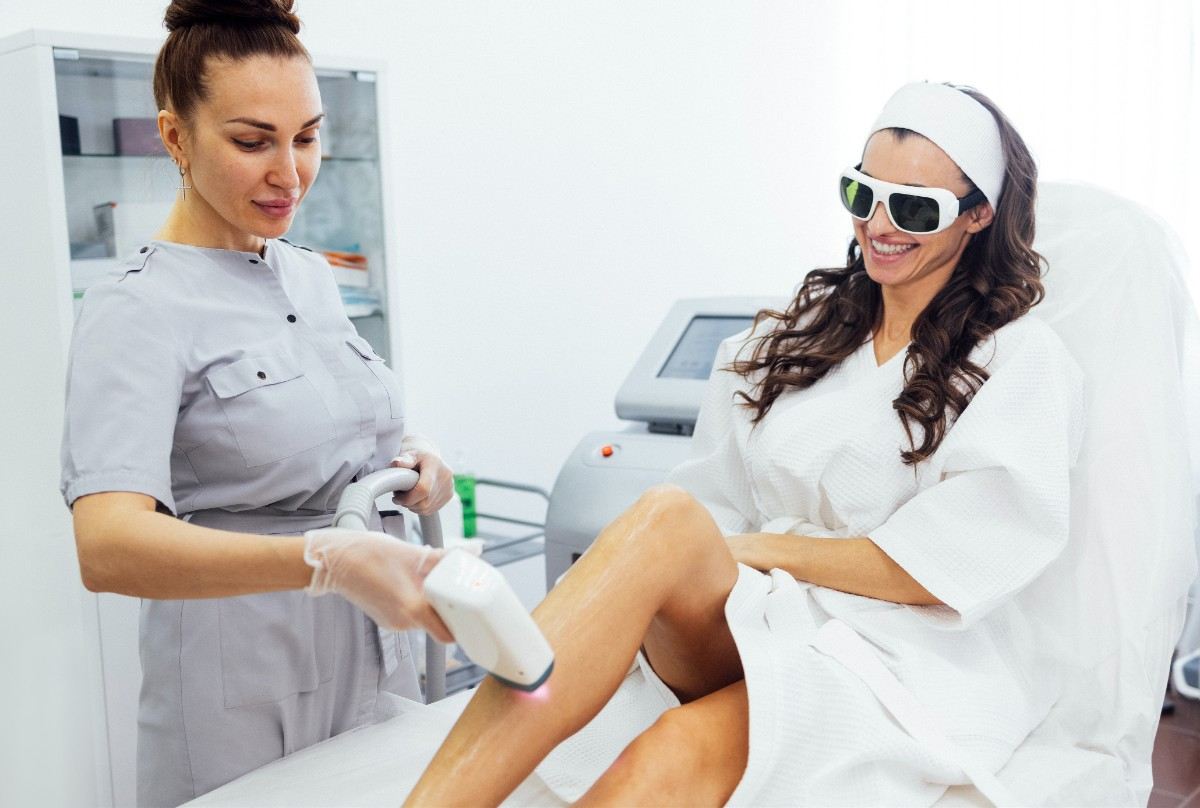
The treatment area is cleansed. Protective eyewear is worn by both the client and provider. Shaving instructions are followed; waxing or plucking is generally avoided because IPL needs the hair shaft present to target pigment.
A cooling gel may be applied to protect the skin and support comfort. Cooling can help reduce heat sensation and protect the surface of the skin.
The IPL handpiece is placed against the skin. The device delivers controlled pulses of broad-spectrum light. Melanin in the hair absorbs the light and converts it to heat. Clients may feel a brief warm flick, snap, or mild pinprick sensation.
Cooling gel may be removed and the skin assessed. Mild redness, warmth, or swelling can occur. You’ll receive aftercare instructions, including sun protection and gentle skincare.
Each session targets hairs currently in the anagen (active growth) phase. Because follicles enter this phase at different times, one session cannot treat every hair effectively.
A series of treatments is usually needed, commonly spaced several weeks apart. The exact number and timing should be personalized by your provider based on the treatment area, hair density, skin tone, and response.
Hair reduction develops progressively over the treatment course. Treated hairs may shed in the days or weeks after a session. Over multiple sessions, regrowth may become finer, lighter, and less dense.
IPL provides hair reduction, not guaranteed permanent removal. Some hair may return over time, and occasional maintenance may be considered.
Hair color: darker hair generally contains more melanin and may respond more predictably.
IPL can be safe for appropriate candidates when performed by a qualified provider with suitable settings and cooling. Temporary redness, warmth, swelling, and mild discomfort can occur.
Burns, blisters, and pigment changes are possible if treatment is unsuitable or performed incorrectly. Disclose medications, skin conditions, recent tanning, and sun exposure before treatment.
Eyre Esthetics offers IPL hair removal in Pasadena, not laser hair removal. A consultation can determine whether IPL is suitable based on your skin tone, hair characteristics, treatment area, and goals.
Eyre’s IPL process uses cooling gel, controlled light pulses, and a personalized treatment schedule tailored to your needs.
Book a consultation with Eyre Esthetics to discuss whether IPL hair removal is right for you.
IPL uses broad-spectrum light that is absorbed by melanin in the hair, converts to heat, and affects the follicle to reduce future growth.
An IPL device emits pulses of broad-spectrum light that target pigment in the hair shaft and follicle.
Light absorption, heat generation, follicle disruption, hair shedding, and gradual reduction over sessions.
IPL targets melanin, so lighter, gray, red, or very fine hair may respond less predictably.
Hair grows in cycles and IPL works best during the active growth phase.
Clients may feel a brief warm flick or snap; cooling gel can support comfort.
No. IPL uses broad-spectrum light, while laser uses a single focused wavelength.
Una has always had a passion for skincare and loves helping others maintain healthy glowing skin. She has a background in healthcare and has an extensive understanding of the lymphatic system from her previous training as a certified Physical Therapist. Una received her Masters in Physical Therapy from Northwestern University. She met her husband, Dr. Steven Battaglia, at Northwestern during his ENT residency. Upon completion of the Masters Program, Una worked as a Physical Therapist in Chicago.
Fill the form below and we’ll get back to you as soon as possible!